Home › Commercial Gravel-to-Asphalt Conversions
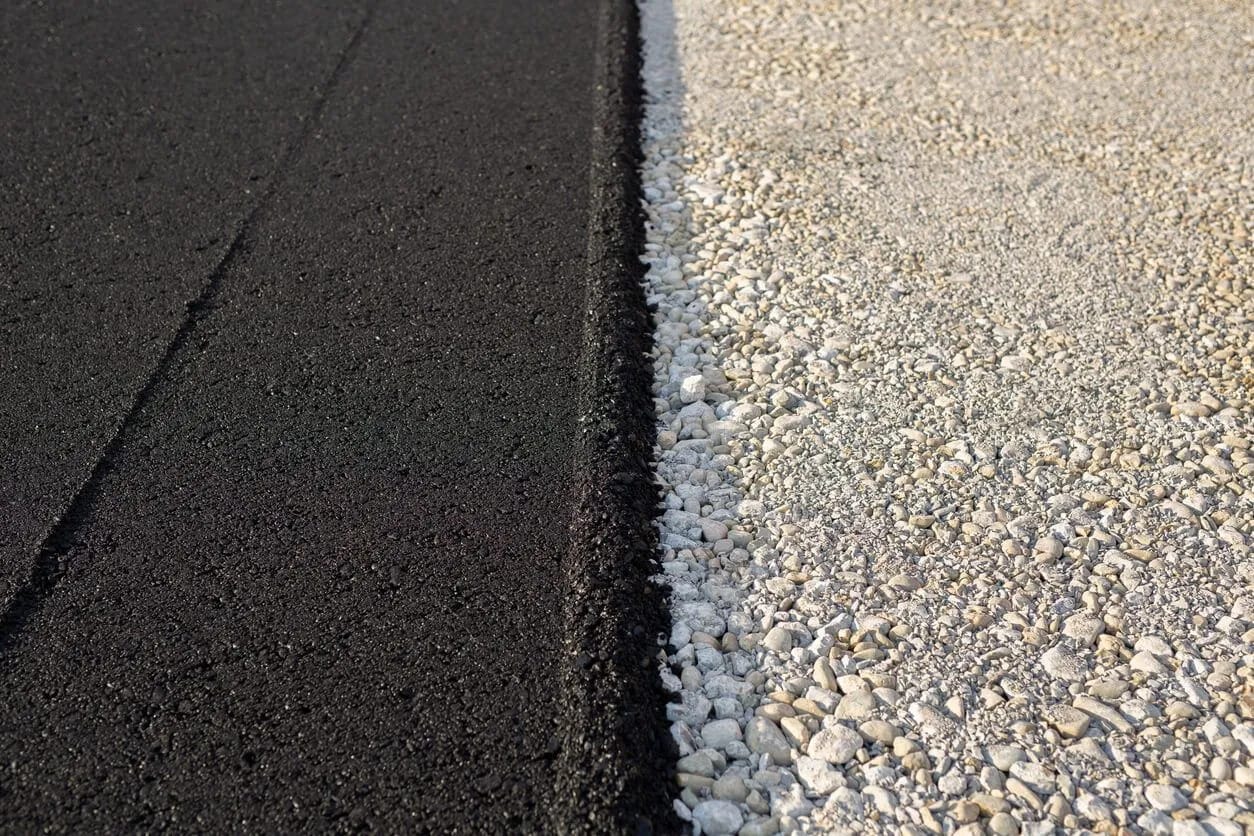
Boost curb appeal and reduce maintenance with commercial gravel to asphalt conversions in Columbus, OH. We transform dusty, muddy gravel lots into smooth paved surfaces that customers appreciate. Our crews handle grading, compaction, and asphalt paving for reliable commercial access.
Precision Asphalt Columbus provides professional commercial gravel to asphalt throughout Columbus, OH, Ohio and the surrounding area. Our licensed, insured crew delivers safe, clean, on-time work with a free estimate before anything begins. Call (614) 907-4859 or request your free quote.
Turn Your Gravel Lot Into a Professional Asphalt Surface
If you are running a business in Columbus and still parking on gravel, you already know the headaches. Dust on your vehicles, ruts after every rain, mud tracked into the building, and frustrated customers looking for a place to park. Precision Asphalt Columbus specializes in commercial gravel to asphalt conversions so you can turn that rough stone lot into a clean, durable, and clearly marked asphalt surface that actually works for your operation.
We focus on real-world needs for Columbus, OH properties. That means designing a pavement structure that can handle freeze-thaw cycles, plow trucks in winter, delivery traffic, and drainage during heavy rains. We look at how your customers and trucks actually move and park, not just a generic layout drawn on a computer. The goal is simple: a long-lasting asphalt lot that looks professional and holds up in central Ohio conditions.
When you call Precision Asphalt Columbus, we start by walking the site with you. We talk about how many spaces you need, where you want accessible parking and loading zones, how trucks turn, and what your future expansion plans are. Then we recommend a thickness and design that makes sense for your traffic and budget, instead of a one-size-fits-all cross section.
How Commercial Gravel-to-Asphalt Conversions Are Done
A proper gravel to asphalt conversion is more than just paving over stone. Our crews follow a step-by-step process to avoid future settling, puddles, and cracking.
1) Subgrade and existing gravel review. We start by test probing the existing gravel depth and checking the soil below it. Columbus has a lot of clay soils that hold water. If the stone layer is too thin or the soil is pumping or soft under truck traffic, we plan to undercut or reinforce those areas.
2) Grading and drainage planning. We shoot grades with a laser to create positive slopes toward appropriate drainage points or catch basins. In our region, it is critical that water does not sit on the pavement before winter. Standing water turns to ice and also speeds up asphalt deterioration. We may recommend adding a drain or reworking swales before paving.
3) Base construction. For light duty commercial parking lots with car and light truck traffic, we typically recommend 6 to 8 inches of compacted aggregate base on top of stable soil. For heavier use such as delivery trucks, dumpsters, or semi traffic, we may go to 8 to 12 inches and sometimes use a larger aggregate or geotextile fabric over softer subgrade. We place the stone in lifts and compact each lift with vibratory rollers so the surface is tight and stable.
4) Proof rolling. Before any asphalt is placed, we proof roll the stone with a loaded truck or heavy roller. If the base deflects, shoves, or shows soft spots, we correct those with undercut, additional stone, or stabilization. Skipping this step is one of the reasons some lots rut and settle soon after paving.
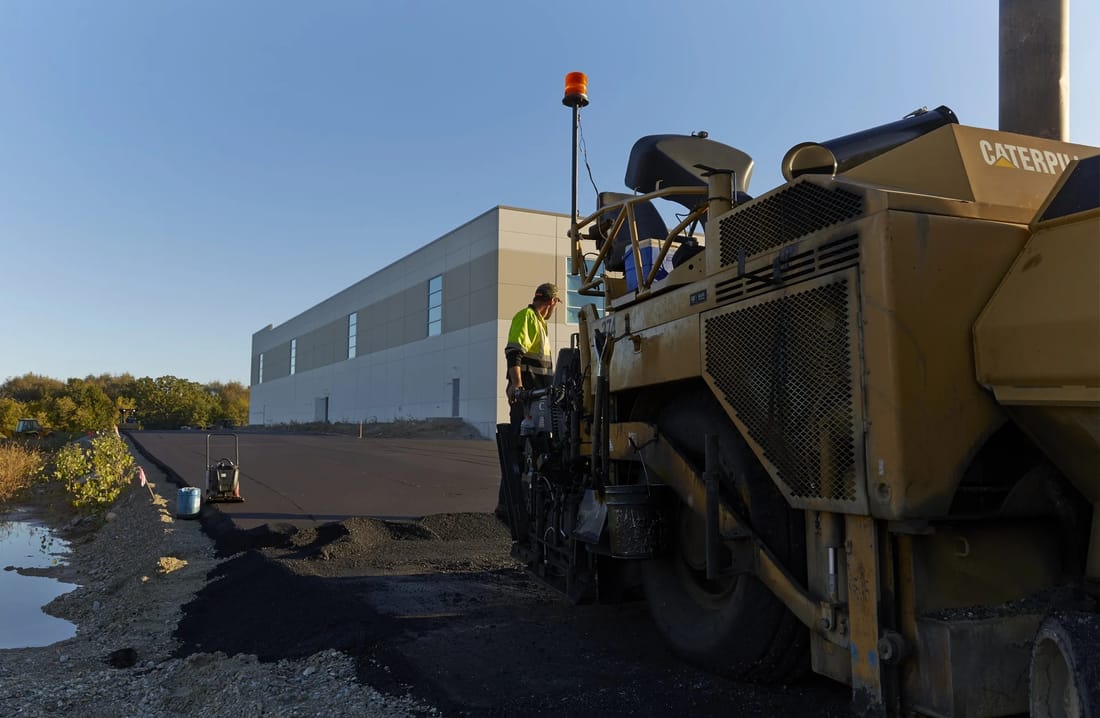
5) Asphalt paving. For most commercial gravel to asphalt conversions in Columbus, we install either a single lift of 3 to 4 inches of asphalt, or a two-course system such as a 2 to 2.5 inch base course and a 1.5 to 2 inch surface course. Heavier traffic requires thicker sections. We use hot mix asphalt from local Columbus plants, place it with a paver, and compact it with steel and pneumatic rollers to achieve proper density.
6) Striping and finishing details. Once the asphalt cures, we layout and stripe parking spaces, accessible stalls, loading zones, and fire lanes. We can also install wheel stops, signage posts, and bollards around vulnerable building corners or utilities. These details turn a black surface into a well organized commercial lot.
Cost Factors for Commercial Gravel to Asphalt in Columbus
Two lots that look similar on the surface can have very different costs once we dig into the details. Precision Asphalt Columbus is transparent about what really drives the price of a commercial gravel to asphalt conversion in central Ohio.
Lot size and shape. Larger areas usually have a lower cost per square foot, but irregular shapes and tight areas around buildings or utilities increase handwork and time. A simple rectangular lot costs less per square foot to pave than a lot broken up by islands and drive-thru lanes.
Existing gravel and soil conditions. If you already have a deep, well graded stone base that has been in place for years and is draining well, we may only need minor grading and compaction before paving. On the other hand, if the gravel is thin, mixed with mud, or holds water, we need to excavate and rebuild the base, which adds cost but is necessary for long life.
Traffic loading. A small office parking lot that only sees cars can use a lighter asphalt section than a distribution center lot that sees repeated semi and box truck traffic. Heavier use means thicker stone and asphalt, possibly two asphalt lifts, and more compaction passes.
Drainage improvements. In many Columbus lots, the biggest hidden cost is fixing drainage. Adding a new catch basin, tying into an existing storm line, cutting new swales, or regrading large areas all affect price. We explain these options clearly and show the tradeoffs between minimal work now versus performance over the next 10 to 15 years.
Season and schedule constraints. Asphalt work is weather sensitive in Ohio. Working in ideal conditions allows faster production and lower risk. If your project must be done in a tight off-hours window, overnight, or late in the fall shoulder season, that can add costs for extra crew time, lighting, or weather risk management.
Dealing With Common Problems on Gravel Lots Before Paving
Many gravel lots in Columbus have the same issues: deep ruts where vehicles turn, mud that pushes up through stone, and low spots that pond after storms. If those problems are not corrected before paving, they show up again as cracks, dips, and potholes in the asphalt.
Soft or pumping areas. These are places where water-saturated soils under the gravel move when vehicles drive over them. We identify them during the site visit and proof rolling. The fix usually involves undercutting (digging out) soft material, installing geotextile fabric, and replacing it with thicker, compacted aggregate.
Poor drainage and standing water. If water sits in your gravel now, it will sit on your asphalt later unless we provide a path for it to leave. We may raise low areas, cut shallow swales, or recommend installing additional catch basins or trench drains. This is especially important in Columbus, where freeze-thaw cycles can turn ponded water into cracks and surface failure.
Mixed or contaminated stone. Older gravel lots sometimes get patched with whatever material is on hand, from recycled concrete to construction debris. Before paving, we often need to regrade and sometimes remove inconsistent material so the base compacts evenly. We bring in the correct size and type of aggregate to create a uniform platform.
Access and business operations. Keeping your business open during a gravel to asphalt conversion takes planning. We typically phase the work so one area remains usable while the other is under construction, or schedule the most disruptive parts for evenings or weekends. Precision Asphalt Columbus works this out with you ahead of time so deliveries, customer parking, and emergency access are maintained as much as possible.
Timing Your Gravel-to-Asphalt Project in Central Ohio
In Columbus, most commercial gravel to asphalt conversions are best performed from late spring through early fall when temperatures are warmer and more stable. Asphalt needs sufficient ground and air temperatures to compact properly and bond to the base. Trying to rush a full conversion very early or very late in the season often means shorter working windows and higher risk of issues.
We also consider your specific site conditions. Lots with poor drainage or low-lying clay areas are easier to fix when the ground is not saturated. That often means avoiding the very wet early spring period. Similarly, if your operation is busiest in summer, we may plan the conversion for a shoulder season period and phase the work to limit disruption.
Before you schedule, it helps to decide on any upgrades you want to include. This might be reconfiguring the layout to add spaces, creating designated delivery zones, or preparing for future EV charging stations or cart corrals. Planning these details ahead of time saves rework and makes sure the new asphalt layout supports your long-term plans.
If you are considering a commercial gravel to asphalt project anywhere in the Columbus, OH area, Precision Asphalt Columbus can inspect your lot, give you straightforward recommendations, and provide a clear scope and price so you know exactly what you are getting before we start.