Home › Private Road and Lane Paving
Improve access and reduce dust with private road paving in Columbus, OH. We install asphalt on shared driveways, rural lanes, and long access roads for smoother, safer travel. Our team designs proper drainage and thickness to handle your traffic and vehicle loads.
Precision Asphalt Columbus provides professional private road paving throughout Columbus, OH, Ohio and the surrounding area. Our licensed, insured crew delivers safe, clean, on-time work with a free estimate before anything begins. Call (614) 907-4859 or request your free quote.
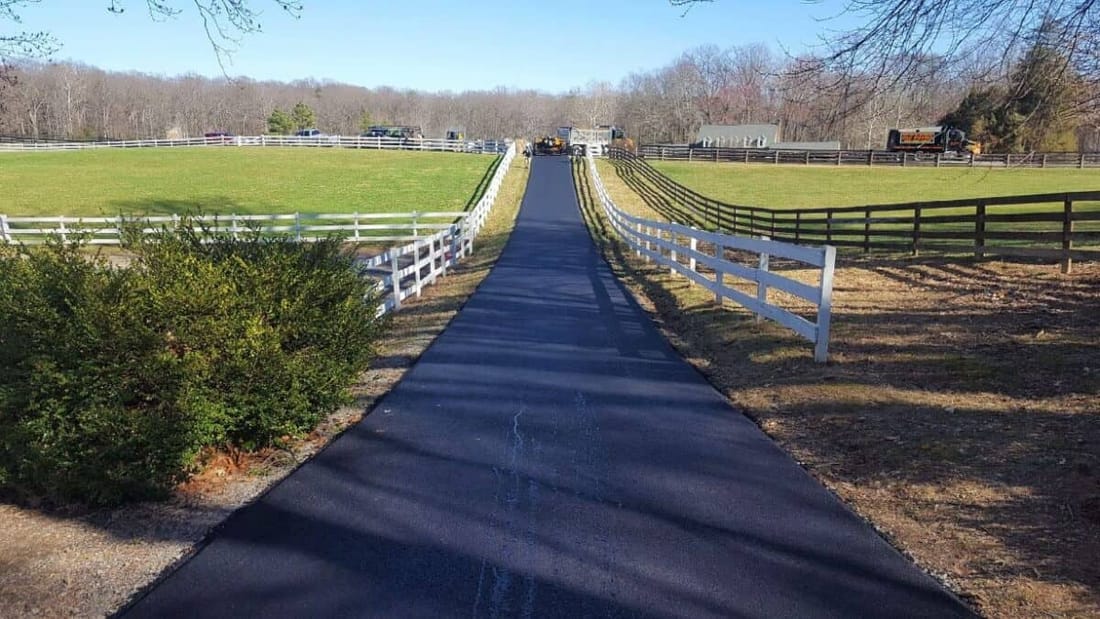
Private Road Paving in Columbus, Designed Around How You Actually Use It
If you own a long driveway, a shared lane, or a private road that serves multiple homes or farm buildings, you already know it takes more abuse than a standard residential driveway. At Precision Asphalt Columbus, we treat private road paving as its own category of work, not just a “big driveway.” That means we size the pavement, drainage, and base specifically for the traffic you see in Franklin County and the surrounding Columbus area.
Our team starts by walking the entire road or lane with you. We look at ruts, soft spots, places that hold water, and any tight turns where vehicles scrub the surface. We ask what actually uses the road: passenger cars only, delivery trucks, horse trailers, or heavy farm or construction equipment. The answers to those questions affect how thick the asphalt needs to be, what kind of base stone we install, and where we may need extra reinforcement.
In central Ohio, the freeze and thaw cycles are a big deal for private roads. Water that sits in low spots or in a weak base layer can expand in winter, then collapse in spring, which is where potholes and cracking start. When we design a private lane in Columbus, we are always thinking about how to get water off and away from the asphalt and how to build a base that will not pump and move when the ground is saturated.
Because many private roads are shared, we also help groups of neighbors or HOA boards understand their options. We can price the road in sections so you can see how costs change with different widths, thicknesses, and add-ons like extra gravel shoulders. That way, the group can make an informed decision instead of guessing at what will last.
How We Build a Long‑Lasting Private Road or Lane
Private road paving involves more than just laying blacktop. At Precision Asphalt Columbus we follow a clear process so you know what is happening at every step.
1. Evaluation and measurements: We start with detailed measurements and a visual inspection. We probe soft areas with hand tools, check existing gravel depth if there is a current lane, and note utility locations, culverts, and trees. For longer roads outside Columbus we may also look at soil maps, since some pockets of central Ohio have more clay, which affects drainage and base design.
2. Grading and base construction: The most important part of private road paving is the base. For a new lane, we rough grade the path, then install and compact crushed limestone in one or more lifts. For light residential traffic, we may install 6 to 8 inches of compacted aggregate. For heavier loads we commonly recommend 10 to 12 inches. We shape the base with a crown (a slight rise in the center) or use side slope so water flows to the ditches, not down the middle of your road.
3. Tack and paving: Once the base is compacted and approved, we apply a tack coat if we are paving over an existing surface, then place the hot mix asphalt with a paver. For private roads that only see cars and light pickups, a typical structure might be 2.5 inches of base course asphalt and 1.5 inches of surface course. For shared farm lanes or contractor yards that see dump trucks, we increase that thickness. We compact the asphalt with steel drum and pneumatic rollers, paying close attention to joints where one paving pass meets another.
4. Edges, shoulders, and tie‑ins: To keep the pavement from crumbling at the sides, we shape and compact the edges and often add gravel shoulders. We also make sure driveways, parking pads, and public roads tie in smoothly, so there is no “lip” that can catch snowplows or plow blades.
5. Final inspection and care instructions: After rolling, we walk the road with you to confirm that drainage looks right and the surface is smooth. Before we leave, we talk through timing for opening the road to traffic, when to sealcoat, and how to handle plowing and de‑icing in Columbus winters so you do not accidentally shorten the life of your new pavement.
Material Choices, Design Options, and What Drives the Cost
Every private lane is different, and we like to be very open about what affects pricing so there are no surprises.
Traffic load: If your road only serves a few cars and small SUVs, a lighter asphalt structure can work. If you have regular visits from propane trucks, horse trailers, or heavy delivery trucks, you need more base stone and thicker asphalt. The added cost up front usually saves money by avoiding early rutting and base failure.
Length, width, and layout: A straight, 10‑foot wide lane that runs 300 feet through a flat yard in Columbus is much different from a winding half‑mile road with hills and curves on a wooded property outside the city. Sharp curves may need extra width so vehicles stay on the pavement, and slopes may require different compaction methods and drainage details.
Existing conditions: If you already have a stable gravel drive with good depth, we can often regrade and pave over it, which saves money. If the lane has thin, dirty gravel over soft soil, or if we find pumping mud pockets, we will recommend undercutting those areas and rebuilding the base. That work costs more, but skipping it is what leads to potholes a year or two after paving.
Mix type and thickness: For most private roads in central Ohio we use ODOT‑approved asphalt mixes tailored to local plants. In some situations, like hills or intersections where vehicles brake and turn, we may recommend a slightly stiffer surface mix that resists shoving and scuffing. We will always explain the pros and cons in plain language, including how changes in thickness or mix type affect cost.
Drainage upgrades: Installing or replacing culverts, cutting swales, or improving ditches adds to the budget, but poor drainage is the number one cause of early failure. For properties around Columbus with heavy clay soils and low spots, we often suggest modest drainage improvements as the best “extra” you can invest in.
Timing, Weather, and Maintenance in Columbus, Ohio
Our climate in Columbus matters a lot for private road paving. Hot mix asphalt needs to be placed and compacted while it is still at the right temperature. In central Ohio that means our main paving season typically runs from April through early November, with the exact start and stop dates depending on overnight temperatures and rain patterns.
We avoid paving private roads on days when the base is saturated or when temperatures are too low, because you will end up with weaker compaction and a shorter‑lived surface. If your property tends to stay wet, we might schedule work after a dry spell and may recommend underdrain or additional ditching so the base stays firm.
Once your private road is paved, there are a few maintenance habits that make a big difference:
• Plowing and snow removal: When you plow, set the blade slightly up so it does not scrape the surface and gouge the asphalt. For new roads in their first winter around Columbus, we recommend using rubber or poly edges on plow blades whenever possible.
• De‑icing materials: Standard rock salt is generally acceptable on asphalt, but avoid spiking it with sharp gravel that can gouge the surface. For long private lanes, having a mix of salt and fine grit sand is usually a good balance for traction without excessive damage.
• Sealing and crack repair: We typically suggest waiting at least 9 to 12 months before applying the first sealcoat so the asphalt can cure. After that, resealing every 3 to 5 years, and routing and sealing any cracks that appear, will keep water out of the base. Precision Asphalt Columbus offers maintenance plans so private road owners do not have to guess when to schedule work.
These details might seem small, but they are tailored to how Columbus weather really behaves. If you are unsure how to care for your new lane, we are always happy to walk you through a yearly checklist.
Common Problems With Private Roads and How We Prevent Them
If you have lived with a gravel or poorly paved private lane for a while, you have probably seen the same issues repeat: washboards, mud holes, standing water, and potholes that come back no matter how often they are filled. At Precision Asphalt Columbus, a big part of our job is diagnosing why those problems started and addressing them in the design before we ever bring in the paver.
Rutting and wheel tracks: These are usually caused by an undersized base or heavy vehicles repeatedly traveling in the same narrow path. We counter this by building enough stone thickness and sometimes slightly widening the lane so vehicles do not ride right on the edge. On steeper grades around the Columbus outskirts, we pay extra attention to compaction and may adjust the asphalt mix for better stability.
Potholes and soft spots: Repeated potholes often mean the underlying soil is weak or water is trapped beneath the pavement. Just patching the hole is a short‑term band‑aid. Our crews cut out failed sections, remove the unstable material, rebuild the base with proper aggregate, and then repave. On new jobs, we identify and fix those wet pockets before asphalt ever goes down.
Drainage failures: Ditches that are too shallow, plugged culverts, and driveways that sit higher than the road surface can all trap water. When we pave a private road, we look at how water moves over the whole property, not just the pavement. This may involve deepening a ditch, re‑setting a driveway pipe, or adjusting the crown of the road. Simple grading changes are often the least expensive way to add years of life to your lane.
Edge crumbling and gravel washout: Without support, pavement edges can break off over time, especially when drivers pull to the side to let others pass. Installing compacted gravel shoulders and encouraging a consistent travel path helps. For long lanes that see two‑way traffic, we often recommend a little extra width right from the start so vehicles can pass without dropping off the edge.
By listening to how you use your private road and by paying close attention to the ground it sits on, we build solutions that actually hold up in real Columbus conditions, not just look good for the first season.